The Rhyme Game
Creative RhythmMusic
4.435.00 Reviews
- Version
- 3.8.2
- Installs
- 100.00K
- Age Rating
- Teen
Screenshots
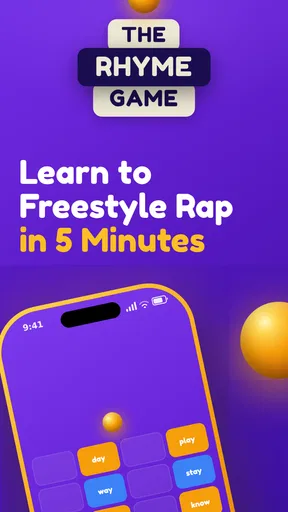
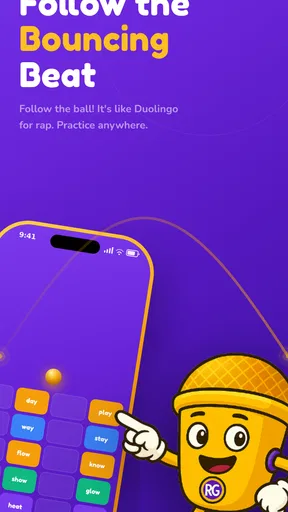
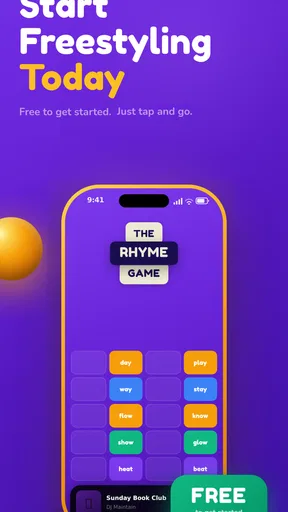
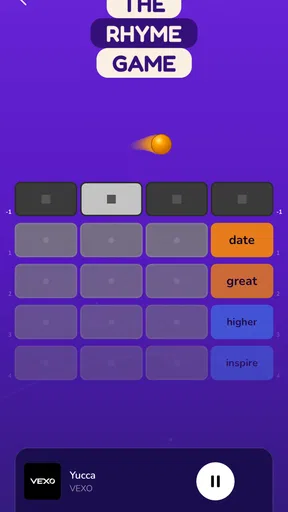
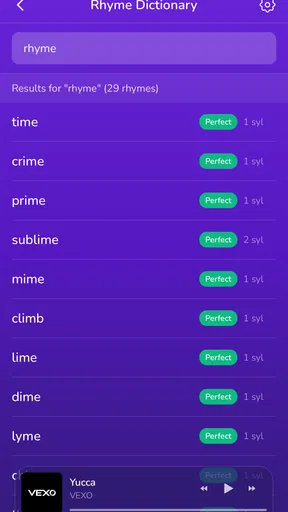
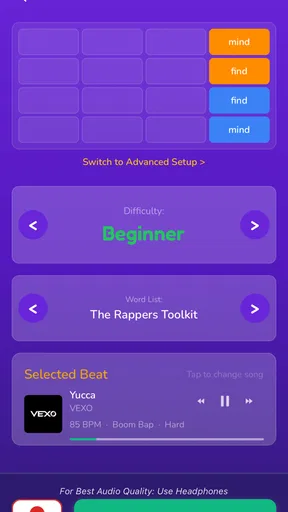
Our Review of The Rhyme Game
 Analysis by Appyee
I approached The Rhyme Game as a quick music game rather than a full rap-production tool, and that distinction matters from the first session. Its aim is simple: help you practice freestyle rap at a moment when you have a few spare minutes, a phone in your hand, and enough confidence to say the first line out loud. Creative Rhythm has built something that feels more like a prompt-driven exercise than a conventional rhythm game, so the main challenge is not tapping perfectly to a beat. It is finding words, keeping a thought moving, and accepting that the first attempt may sound awkward.
That makes it appealing to beginners who want a low-pressure way into freestyle rap practice. I can also see experienced rappers using it as a warm-up before writing or recording. At the same time, anyone expecting a complete beat-making studio, a deep music-learning course, or a competitive multiplayer experience should adjust those expectations. The Rhyme Game is at its best when I treat it as a small daily exercise, not as a replacement for a digital audio workstation or a structured vocal lesson.
Getting past the first points of friction
I use this section to look at why a first session can feel awkward and how a small change in expectations can make it more inviting. The useful next step is to treat early hesitation as something to work around, not proof that freestyle is out of reach.
Why the opening session can feel less obvious than expected
The short store description calls it “The Rhyme Game,” while the broader promise is learning to freestyle quickly. Those two ideas can create different expectations. A player may open it looking for an arcade game with obvious timing lanes, scores, and familiar music-game rules. Someone else may expect lessons explaining rhyme families, rhythm, breath control, and song structure. In practice, the useful mindset is closer to guided improvisation: the app gives you a reason to start, and you supply the words.
That can feel uncomfortable because there is no perfect way to improvise. When I am writing a verse privately, I can delete a weak line and try again. A freestyle exercise removes that safety net. The first few rounds may therefore feel like a test of confidence rather than a test of musical ability. I found it more productive to judge each attempt by whether I kept going, not by whether every rhyme was clever.
A practical way to begin is to speak quietly before trying to perform loudly. I first think of a simple subject, then connect the next line to the last word instead of searching for an impressive punchline. This reduces the mental load. It also reveals what the game is really useful for: building the habit of responding quickly, rather than producing polished lyrics on demand.
What to check before blaming the game
Because this is a voice-and-rhythm activity, the surroundings matter more than they would in a silent puzzle game. I would start in a place where I can speak without feeling rushed. A noisy room makes it harder to hear my own timing, while a crowded setting can make the whole experience feel embarrassing even when the app is working normally. Headphones can help me focus on the audio, but I would still leave enough awareness of my own voice to keep a natural cadence.
It is also worth deciding what kind of session you want before opening it. If I have only a minute, I use a simple warm-up: choose a familiar topic and keep the lines short. If I have more time, I try to vary the subject and deliberately change my rhythm. Going in with one small goal prevents the session from becoming a vague attempt to “get better at rap,” which is too broad to measure.
The game is free to start, which makes experimentation easy, although optional in-app purchases range from under a dollar to amounts approaching thirty dollars per item. I would not buy anything immediately. A few sessions are enough to tell whether the core exercise suits you, whether you enjoy speaking into the experience, and whether its pace matches your expectations. That is a better decision than paying based only on the promise of fast improvement.
Device and account habits that make a difference
The Rhyme Game supports devices running Android 7.0 or later, so compatibility is not limited to recent phones. Still, an older supported device may feel less comfortable if it struggles with audio playback, switching between applications, or keeping the screen responsive. Before a serious practice session, I would close demanding background apps, make sure the phone has a reasonable charge, and avoid moving between the game and another app while trying to maintain a flow.
If the first launch feels slow or an interaction does not respond, I would begin with ordinary checks rather than assuming the exercise itself is broken. Fully closing and reopening the app can clear a temporary state. Restarting the phone is also sensible when audio behaves strangely across several apps. These are basic steps, but they are especially useful when the problem appears only once and cannot be reproduced.
I would also test the phone’s sound with another familiar audio app. If music, spoken video, or system sounds are already unreliable, the problem probably sits outside this game. That simple comparison avoids wasting time changing settings inside one application when the device is the real source of the trouble.
Recovering a session when the flow breaks
Freestyle practice has a different kind of failure from a normal game. Sometimes the interface is fine, but I lose the thread of what I was saying. The best recovery is not to force the original idea back into place. I pause, repeat the last clear word, and use that word as the starting point for a fresh line. This turns a mistake into another exercise in response speed.
When the audio or interaction seems to stop behaving properly, I use a short recovery routine. I leave the current activity, return to the main screen if possible, and try again with a simpler prompt or more relaxed delivery. If the issue remains, I close the app completely and relaunch it. I avoid repeatedly tapping the same control, because rapid repeated input can make it harder to tell whether the app is delayed or whether I have accidentally changed the state of the session.
Another useful habit is separating technical recovery from performance recovery. If the sound is missing, I check the phone volume and audio output first. If the sound is present but my lines are failing, I lower the difficulty I have created for myself: fewer syllables, familiar subjects, and no attempt to rhyme every word. That distinction keeps a normal creative stumble from looking like a software problem.
Making short sessions produce better practice
The strongest use case I found is a repeatable routine rather than a long, exhausting session. I might start with ordinary objects around me, describe what I see, and then connect each line to the previous one. After that, I try a more abstract subject such as a mood or a memory. The first exercise helps me start quickly; the second tests whether I can keep an idea coherent when there is no obvious list of nouns to use.
A less obvious benefit is that I can use the game to identify my personal hesitation pattern. Some people freeze while searching for rhymes, while others lose rhythm because they are planning the next idea too far ahead. I notice which problem appears first and then design the next attempt around it. For example, if I overthink rhymes, I accept simple ones and concentrate on continuing. If I rush, I deliberately leave a small pause between lines.
I would not try to improve vocabulary, rhythm, storytelling, and confidence in one round. Pick one target. A useful weekly pattern could alternate between keeping a steady pace, linking ideas, and ending lines cleanly. Even without turning the experience into a formal course, this gives each session a purpose and makes progress easier to notice.
When the app is not the cause
Not every frustrating result comes from the software. A weak microphone position, a loud room, Bluetooth audio switching, or a phone that is nearly out of storage can affect the experience around any voice-based activity. If the problem appears in other apps too, I would inspect the device’s audio output, restart the phone, and test again before changing anything else. If only this game behaves differently, a fresh launch and a simpler session are reasonable first steps.
My own performance can also create misleading symptoms. Speaking too quietly makes timing feel uncertain. Speaking too quickly makes it difficult to form the next line. Trying to sound impressive from the opening second often produces more pauses than a plain, conversational delivery. I get better results when I treat the first attempt as a warm-up and save ambitious wordplay for later.
The setting is another overlooked factor. This is not an ideal choice for someone who needs silent practice on public transport or in a shared office. A notebook can be better in those situations because it lets me work on rhyme patterns without speaking. Likewise, if I want precise pitch training, instrumental arrangement, or recorded vocal editing, a dedicated music app is the more suitable tool. The Rhyme Game occupies a narrower space: quick spoken improvisation with a playful structure.
How it compares with familiar alternatives
Compared with writing lyrics in a notes app, this game adds urgency. A blank page gives me unlimited time and makes revision easy, which is excellent for songwriting but less helpful for spontaneous response. The Rhyme Game is more useful when my problem is starting quickly or continuing after an imperfect line. The trade-off is control: I cannot shape the exercise as precisely as I can shape a written verse.
Compared with karaoke, the focus is different. Karaoke supports performance through a known melody and existing lyrics, while this experience asks me to generate language myself. That makes it more demanding for beginners, but it also targets a skill karaoke does not necessarily develop. If I mainly want to sing along and relax, karaoke is the better fit. If I want to loosen up before writing or rapping, this game has a clearer purpose.
Compared with a full beat-making application, it is much less intimidating. I do not need to learn tracks, effects, mixing, or arrangement before starting a practice round. That simplicity is a genuine strength for a newcomer. The limitation is equally clear: it will not replace tools for building a finished song. I would use the two together only if I wanted to turn an improvised idea into a more developed recording afterward.
Compared with a formal rap lesson, the game offers less explanation and more immediate repetition. A teacher can correct breath, diction, rhythm, and phrasing in a way an app cannot fully reproduce. The game is therefore better as a private supplement than as a complete curriculum. Someone who wants a carefully sequenced education should choose lessons or a course; someone who needs a low-pressure daily prompt may prefer this.
Who will enjoy it and who should skip it
I think it suits curious beginners, casual music fans, and writers who want to stop overediting their first ideas. It can also work for an experienced rapper who needs a quick vocal warm-up before a longer creative session. The Teen content rating is a useful signal for families and younger users making a choice, although I would still consider the individual player’s comfort with improvising aloud.
I would be cautious about recommending it to someone who dislikes speaking spontaneously, wants a silent activity, or expects a conventional score-chasing rhythm game. It is also not my first choice for a person whose main goal is music production, vocal tuning, or learning an instrument. The game has a focused purpose, and its value drops sharply when that purpose does not match what the player wants from a music app.
There is also a confidence barrier that no setting can completely remove. A player may understand the exercise but still dislike hearing their own voice. In that case, short private sessions are more realistic than forcing a long performance. If the discomfort remains after several attempts, a lyric-writing app or paper notebook may be a better starting point, with this game introduced later as a way to practice delivery.
What the current release tells me
Creative Rhythm is the developer behind this free music game, which has reached over fifty thousand installs and holds a 4.4 average from roughly two hundred fifty ratings. Those figures suggest a modest but real audience, not a giant mainstream platform. I read that as encouraging for people who prefer trying a focused experiment without committing to a large ecosystem of tools.
The game was released on February 13, 2024, and the current version is 3.4.26. I would keep the app updated through the normal platform process, particularly if a problem appears after the phone’s operating system or audio behavior changes. I would also remember that an update can improve stability without changing the central experience: the app remains a practice-oriented game, not a complete studio.
The free entry point is important because the right way to judge it is through use, not through the description alone. I would spend several short sessions testing different approaches before considering an optional purchase. The available items cost from $0.99 to $29.99 each, so the sensible approach is to identify a specific benefit I actually want rather than treating every purchase as necessary for learning.
My practical verdict after using it
The Rhyme Game is most valuable when I use it as a small, repeatable confidence workout. It gives beginners a reason to speak, react, and keep moving instead of waiting for a perfect lyric. That is a meaningful role, especially for someone who has written lines privately but freezes when trying to deliver them aloud.
Its limitations are part of the same design choice that makes it approachable. It does not offer the breadth of a production suite, the detailed correction of a teacher, or the quiet control of a notes app. A player looking for those things should choose a different tool. The experience also depends heavily on environment, attention, and willingness to sound imperfect at first.
For me, the best routine is simple: use a quiet space, choose one skill for the session, begin with easy subjects, and restart calmly when the flow breaks. Check the phone’s audio with another app before assuming the game is at fault, and do not rush into optional purchases before deciding whether the basic activity belongs in your routine. With those expectations, Creative Rhythm’s game becomes a friendly entry point into freestyle rather than an overpromised shortcut.
I would recommend trying it to anyone who wants a free, approachable way to practice spontaneous rap on a compatible Android device. I would not recommend it as the only tool for serious musical development. Used alongside writing, listening, and real performance practice, though, it can fill a useful gap: helping ideas leave the page and become something I can actually say.
Privacy and Permissions
See what permissions an app requests and how it handles your data.
- Photos/Media/Files
- read the contents of your USB storage, modify or delete the contents of your USB storage
- Storage
- read the contents of your USB storage, modify or delete the contents of your USB storage
- Camera
- take pictures and videos
- Microphone
- record audio
- Other
- view network connections, full network access, change your audio settings, draw over other apps, control vibration, prevent device from sleeping
Verdict
Strengths of The Rhyme Game
- Simple rules make it easy for children and adults to start playing.
- Encourages vocabulary building through playful rhyme challenges.
- Quick rounds work well for short breaks or family game sessions.
- Can inspire creativity when players invent unusual rhyme combinations.
- Lightweight gameplay is suitable for casual, low-pressure entertainment.
Limitations of The Rhyme Game
- Some prompts may become repetitive after extended play sessions.
- Players with larger vocabularies may have a noticeable advantage.
- Finding valid rhymes can be difficult for younger children.
- Limited depth may not satisfy users seeking complex word games.
- Gameplay depends heavily on personal language skills and pronunciation.
Similar Picks in This Category
View All
Tiles Hop Music & Ball Game
AMANOTES PTE. LTD.4.3

Magic Tiles 3™ - Piano Game
AMANOTES PTE. LTD.4.6

Real Piano
Bilkon3.7

Piano Game: Classic Music Song
Dream Tiles Piano Game Studio4.0

Smash Colors: Music Ball Rush
BADSNOWBALL HONGKONG LIMITED4.2

Piano Music Go-EDM Piano Games
Joy Journey Music Games4.5
Frequently Asked Questions
What is The Rhyme Game and how does it work?
The Rhyme Game is a wordplay app centered on finding, matching, or creating words that rhyme. From my experience using it, the gameplay is generally simple to understand: you receive a word, prompt, or challenge and must provide a suitable rhyme before time runs out or the round ends. It is designed for casual play, vocabulary practice, and friendly competition.
Is The Rhyme Game suitable for children and families?
The Rhyme Game can be enjoyable for children, parents, teachers, and anyone who likes language-based puzzles, but suitability may depend on the specific challenge modes and content included in the current version. Younger players may need help with unfamiliar words or spelling. Parents should also review the app’s age rating, privacy information, advertisements, and any online interaction features before allowing children to use it.
Does The Rhyme Game require an internet connection?
Some parts of The Rhyme Game may work without a constant internet connection, particularly basic solo challenges that are already included in the app. However, an internet connection may be needed for downloading the app’s content, updating the game, displaying advertisements, synchronizing progress, accessing leaderboards, or playing online modes. Availability can vary between Android and iOS versions, so checking the store description is recommended.
Are there advertisements, in-app purchases, or premium features?
The Rhyme Game may be free to download while offering advertisements, optional purchases, or premium features, depending on the version and platform. These could include removing ads, unlocking additional challenges, accessing extra game modes, or receiving other gameplay benefits. Before downloading, review the Google Play or App Store listing and confirm the purchase settings, especially if children may use the device.
What should I check before downloading The Rhyme Game?
Before installing The Rhyme Game, check whether your device meets the required Android or iOS version and has enough available storage. It is also worth reviewing recent user feedback, the app’s privacy policy, permissions, age rating, update history, and whether progress can be restored after changing devices. If you prefer completely offline play or dislike advertising, verify those details first.
Play our best games!


